
About
Update: In February 2025, I hit my limit, so we suspended operations. Here's why: Under the city's Unified Stewardship Plan for Walnut Creek Metropolitan Park:
- We would be allowed to do far less than needed to eradicate invasives and establish high-functioning, more nearly native habitats in our adopted watershed.
- All activities by all entities in the park are intended to produce far less in a year than we typically accomplished in a semester.
- Restrictions that prevent the eradication of infestations of invasive plants are now in force.That's right—this plan will ensure that glossy privet is a permanent part of our park's woodlands.
- Restoration projects still require an approved CAPP. (The CAPP is a form that requires answers to many irrelevant questions, takes a volunteer two hours to complete, and is reviewed in a process managed by people with no working knowledge of volunteer projects. Even when every staffer that reviewer contacted said right away, "Yes, I know who that is, what they're doing, and how they're doing it, and I wholeheartedly approve," we would not be given the OK even one day shy of 6 weeks after we submitted the form.)
- I was having to justify to a contractor everything I had developed since I first led a project in the mid-2000s. In other words, they were paid to pester me, and while walking with them through the park I was supposed to teach them all I have learned—and do it in less than 2 hours, and for free.
- Instead of having two projects a month, scheduled out indefinitely, we would be able to hold no more than two projects a month, scheduled anew each 90 day, if approved.
- We could hold no project with less than 3 weeks' notice to the Austin Parks Foundation.
In January 2013 I started Keep Walnut Creek Wild so volunteers in the park—our park—would be able to do work that has an enduring impact. I wanted them to be able to help improve habitat for wildlife, slow erosion, improve water quality, and enjoy doing it. At the time, volunteers were routinely told that only two projects mattered—picking up litter and picking up dog poop. I can't think of anything that would kill the volunteer spirit faster than having to pick up the poop of everyone else's dogs.
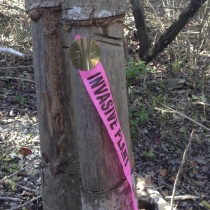
We quickly made that difference. We have made differences that endure. For just one, when the first segment of the Northern Walnut Creek Trail opened in late 2014, the stretch between the trailhead and Tar Branch was flanked by thick patches of Johnson grass, and glossy privet lined the edge of the woods. In March 2015 we removed all the Johnson grass, and by early 2017 those glossy privets were dead and gone. (We used their carcasses to block an unsustainable trail that had been rerouted.)
No Johnson grass by the concrete trail.
As you walk the trail, you see only native trees.
Farther down, a mud pit has become a meadow and, after heavy rains, an upland wetland.
Those changes endure today. And not one of them would have been possible under today's USP.
Worth noting: The USP is a watered-down ripoff of the watershed assessment and restoration plan I wrote for Tar Branch in 2014. It was part of my application to become a 2015 Adopt-a-Creek partner of Keep Austin Beautiful, Austin Parks and Recreation, and Austin Watershed Protection. As part of that process PARD and WPD reviewed the document thoroughly and approved our plan. Ever since, I kept staff in those departments apprised of our progress. In 2018 they supported our application for a grant to buy tools for girdling and uprooting. They separately reviewed and approved dozens of large projects we organized under it.
The city now insists that their USP is the first comprehensive plan for caring for a park that has been thoroughly reviewed and approved by the responsible city departments. They characterize it as comprehensive even though they removed from it every detail related to water infiltration and water quality.
That is a lie. Our watershed assessment and restoration plan beat it by 10 years. And it is so comprehensive that they stole it—and in converting it to their USP reduced it to less than we had implemented.
Our Original Description: Invasive trees, especially chinaberry and ligustrum, are choking native plants out of the greenspaces of Central Texas. As they do, we lose the benefits that a natural ecosystem provides:
- Slowing and filtering runoff.
- Cleaner creeks that flow longer after each rain.
- A wide variety of food sources and nesting sites for native birds.
- Better experiences for people who enjoy the green spaces of our community.
But the good news is that we can make a difference—and, starting in Walnut Creek Metropolitan Park, we are.
We have assessed the state of the watershed of Tar Branch, a small tributary of Walnut Creek. Based on that assessment, we have drafted a restoration plan. Our plan has been approved by the Austin Parks and Recreation Department and the Austin Watershed Protection Division. With this plan approved, we can carry out projects consistently—projects to remove invasive plants, plant native plants, slow erosion, restore natural beauty, and encourage others to care for the parks, preserves, and greenbelts they enjoy.
We started as a meetup group, which we formed to make it easier to plan and carry out our projects. Join us, and help make the Walnut Creek watershed the crown jewel of North and East Austin!